Bruce Checefsky Screening: Over Two Decades of Short Films (2001 - 2023)
Film Program: TRT 70 minutes
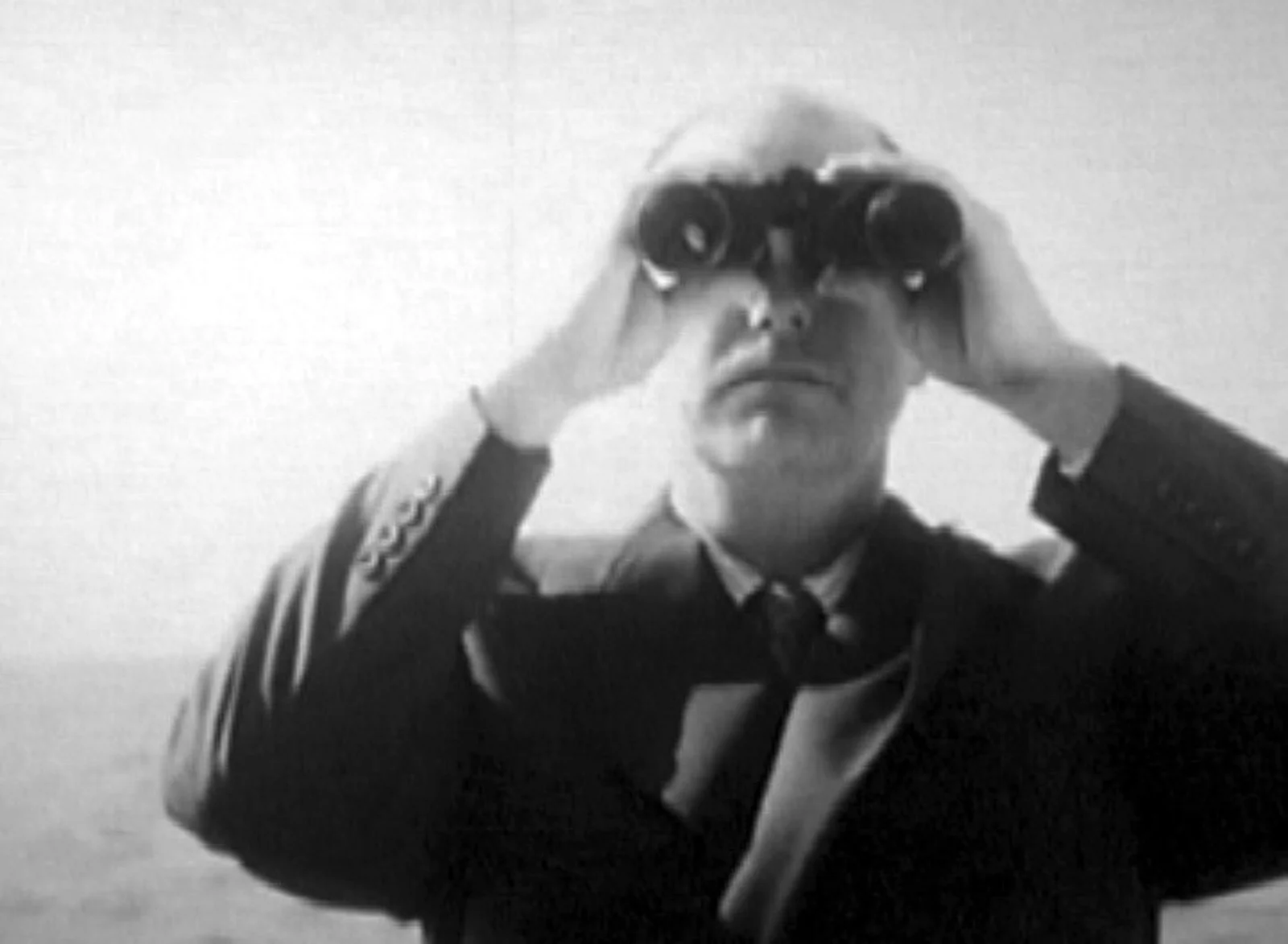
Andy Warhol Films Jack Smith Filming Normal Love (remake), 2023 Digital / original soundtrack / 5:43 min
Jack Smith was filming Normal Love at a rented farmhouse in Old Lyme, Connecticut, during the summer of 1963. Andy Warhol was present in August during the Cake Sequence, in which the cast danced atop a giant wooden birthday cake designed by Claes Oldenburg. Warhol appears in the Cake Sequence with poets Diane di Prima and Mario Montez.
On the same day, Warhol shot his first film, a short color reel titled Andy Warhol Films Jack Smith Filming Normal Love. In February 1964, Warhol screened this film alongside Normal Love at the Film-Makers’ Cinematheque at the New Bowery Theater. Police raided the theater and confiscated both films. Jonas Mekas, who organized the screening, and projectionists Ken Jacobs, Florence Karpf, and Jerry Sims were arrested on charges of exhibiting an obscene film. Mekas and Jacobs were convicted and received suspended sentences. Andy Warhol Films Jack Smith Filming Normal Love is believed to be lost or destroyed.
Doctor Hypnison, or the Technique of Living, 2021 16mm / 35mm / digital / color & b&w / original soundtrack / 6:05 min
Salmon Monny de Boully (Belgrade, 1904 – Paris, 1968) was a poet and publisher, a member of the Serbian Surrealist movement, and a descendant of one of the most prominent Jewish families in Belgrade. In 1923, he wrote a film scenario titled Doctor Hypnison, or the Technique of Life, later publishing the manuscript in Avangardni film 1895–1935, vol. 2. The film was never produced.
In 1928, de Boully moved to Paris to pursue postgraduate studies in law. His parents perished in a Nazi death camp in 1941. Doctor Hypnison, or the Technique of Living is a visual mélange of images and filmmaking techniques designed to produce a mesmerizing, hypnotic effect. The film stars John Riddlebaugh and Kate Kish, with cinematography by Robert Banks, Jr. Tad Mike composed and performed the original soundtrack.
Witch’s Cradle, 2015 Digital video / original soundtrack / 10:22 min
In 1943, experimental filmmaker Maya Deren (1917–1961) collaborated with Marcel Duchamp on Witch’s Cradle, filmed at the Art of This Century Gallery in New York City. The film is a choreographed exchange between figures and camera, exploring the magical qualities of objects within the gallery space, where Duchamp also exhibited. Witch’s Cradle remains unfinished and is considered lost.
BELA, 2010 35mm / b&w / original soundtrack / 5:43 min
In the 1920s, Hungarian Dada artist and avant-garde filmmaker György Gerő created experimental films, beginning with an animated series depicting a blooming cactus. He later published the unrealized experimental film Béla. The original scene-by-scene script, consisting of four pages, is housed in the Budapest City Archives.
Lajos Kassák’s review of Dokumentum (1927) includes a description of Gerő’s conceptual theory and several of his filmmaking techniques. Gerő was later declared neurotic, spared political imprisonment, and admitted to a private hospital in Vienna. By 1935, he had disappeared.
IN NI (Others), 2005 Digital / color & b&w / Polish with English subtitles / 20:43 min
In 1958, experimental filmmaker Andrzej Pawłowski wrote a script based on a diary kept in 1941 by a patient at a psychiatric hospital in Kobierzyn near Kraków. Discovered hidden inside a wall, the diary chronicles daily atrocities committed by the Nazis during the “Ausmerzung lebensunwerten Lebens” (“Life Unworthy of Life”) campaign in occupied Poland.
Although the diary survived the war, its author did not. Pawłowski submitted his script to the National Film Board in Warsaw, but it was never produced before his death in 1986.
Moment Musical, 2006 16mm / b&w / photogram film / sound / 5:43 min
Stefan and Franciszka Themerson’s first sound film, Moment Musical (1933), was a three-minute commercial in which photograms of light-pierced jewelry, porcelain, and glass were animated to music by Maurice Ravel. Their experimental techniques involved manipulating moving lights and shadows on objects, evolving from improvisations with the photogram process.
Stefan Themerson created images on a trick table by placing objects on translucent paper over a sheet of glass. In 1934, T. Toeplitz wrote in Kurier Polski: “And finally I shall mention the Themersons, who shot a truly beautiful commercial—Moment Musical. This film moment is the only film that one cannot raise any objections to.” The film was destroyed during the Second World War.
A Woman and Circles, 2004 35mm / b&w / sound / 9:38 min
This abstract film is based on a script by avant-garde poet Jan Brzękowski, published in 1930 in the literary journal Linia and the French magazine Cercle et Carré. The script illustrated Brzękowski’s theory of abstract film, which rejected anecdotal content in favor of structured combinations of film forms.
Brzękowski argued that abstract film could be constructed either through fantasy or by adopting a normative principle combining images into an artistic structure. Rejecting the surrealist approach, he pursued a method based on image identity, similarity, complementary forms, and contrasts. To preserve the logic of this abstract structure, Checefsky addressed the never-realized concept using a 35mm camera from the 1940s and monochrome film stock from the era in which the script was published.
Pharmacy, 2001 35mm / b&w / silent / 5:00 min
Pharmacy is an experimental film originally made in 1930 by Stefan and Franciszka Themerson using a trick table of their own design. Departing from traditional photogram techniques, they placed objects on translucent paper and photographed them from below using positive film.
The film’s distinctive aesthetic emerges from the interplay of light and soft, dancing shadows created by moving lamps across the trick table, as well as effects produced through the juxtaposition of negative and positive film. According to Franciszka Themerson, Pharmacy was the first film to animate the static photogram technique, previously reserved exclusively for photography.
about BRUCE CHECEFSKY b. 1957, Jessup, Pennsylvania Lives and works in Cleveland, Ohio
Bruce Checefsky has directed numerous films by reimagining and making abstract and avant- garde Eastern European shorts from the 1920s to the 1940s that were lost, destroyed or conceived/scripted but never filmed. Some of his films included early American experimental filmmakers. Checefsky received three OAC Individual Artists Fellowships, a Creative Workforce Fellowship from the Community Partnership for Arts and Culture, and was a four-time recipient of the CEC Artslink International Fellowship. His films screen in museums and film festivals worldwide, including at MOMA, the National Gallery of Art, Lincoln Center for the Performing Arts, Anthology Film Archives, Film-Makers Filmmakers Co-operative, Walker Art Center, Wexner Center for the Arts, Berkeley Art Museum and Pacific Archives, Tate Modern, Tel Aviv Center for Contemporary Art, MoMA Warsaw, ZKM Center for Art and Media, International Film Festival Rotterdam, Toronto International Films Festival, and others.